





Post-Click Audits
We look at what happens after someone clicks your ad. Here is how we do it, step by step.
Post-click means everything after the click: the page, the product page, basket and checkout.


How we run an audit
Six steps we follow on every audit. We agree the timing with you before we start.


- 01
We agree what to look at.
We learn about your store, ads and goals, then agree which pages and data we review.
- 02
We check your numbers first.
We make sure your tracking works before we draw any conclusions from it.
- 03
We go through the store like a shopper.
We click your ads, use each page and look at the numbers for every step.
- 04
We rank what we find.
Each problem is ranked by the value it could add, the proof we have and the work it needs.
- 05
We walk you through it.
A live call of 60 to 90 minutes, where your team can ask questions and challenge us.
- 06
You decide what happens next.
Use the plan with your own team or another agency, or ask us to help.
What we check first
Four rules our team follows on every audit.

We check the
data first.If tracking is broken, we tell you what we can and cannot be sure of.

We follow the
real journey.We start at your ad and go through each page, like a shopper would.

We say what
is proven.We mark what your data shows, and what is only an idea to test.

We look at
profit too.We check order value and discounts, not only how many people buy.
What we look at
Ten parts of your store we check, from the ad to the next order.
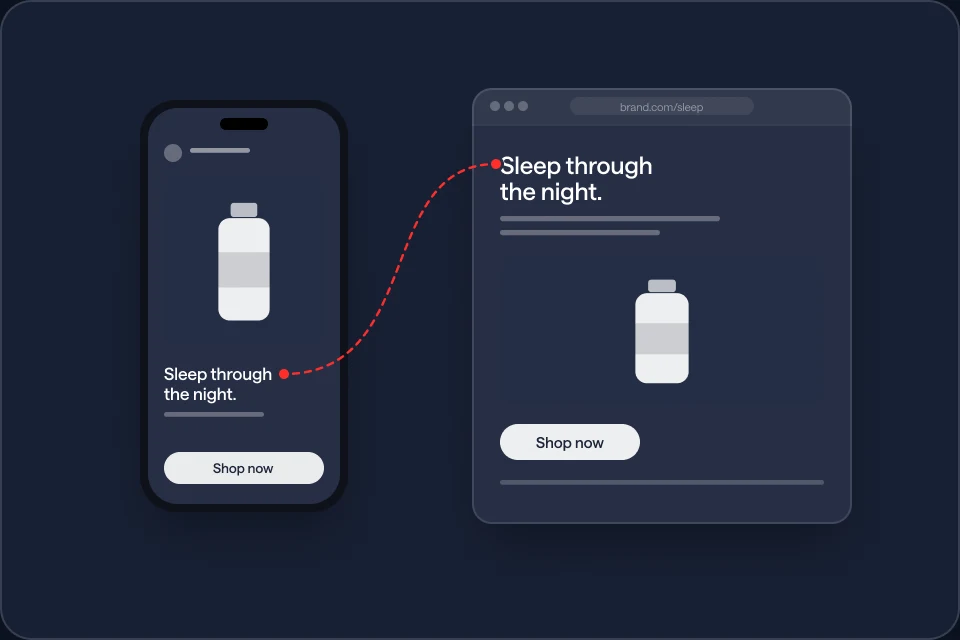
The ad and the page
Does the page carry on what the ad promised?
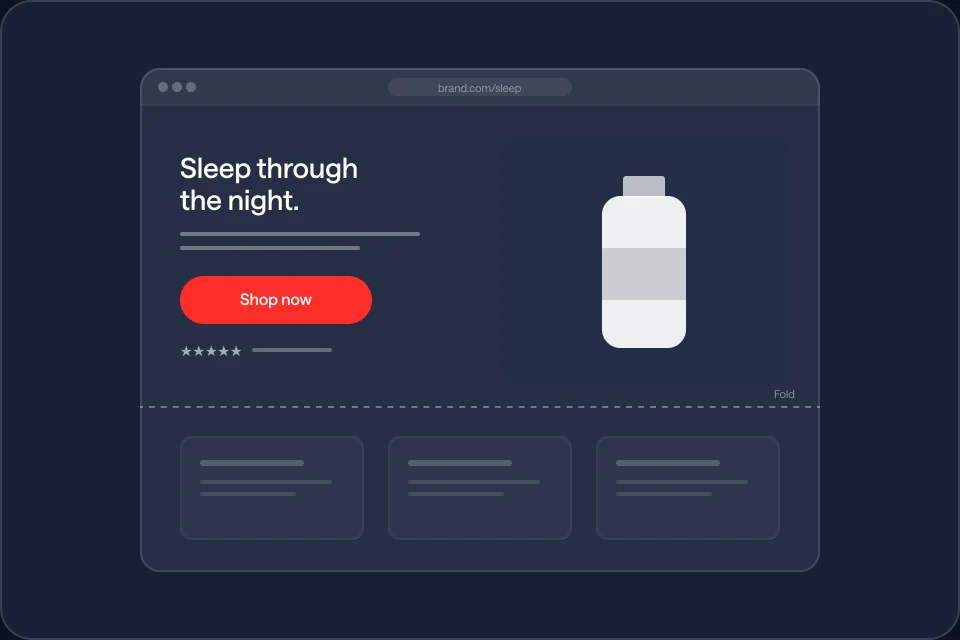
Landing pages
Is the first page clear, fast and easy to act on?
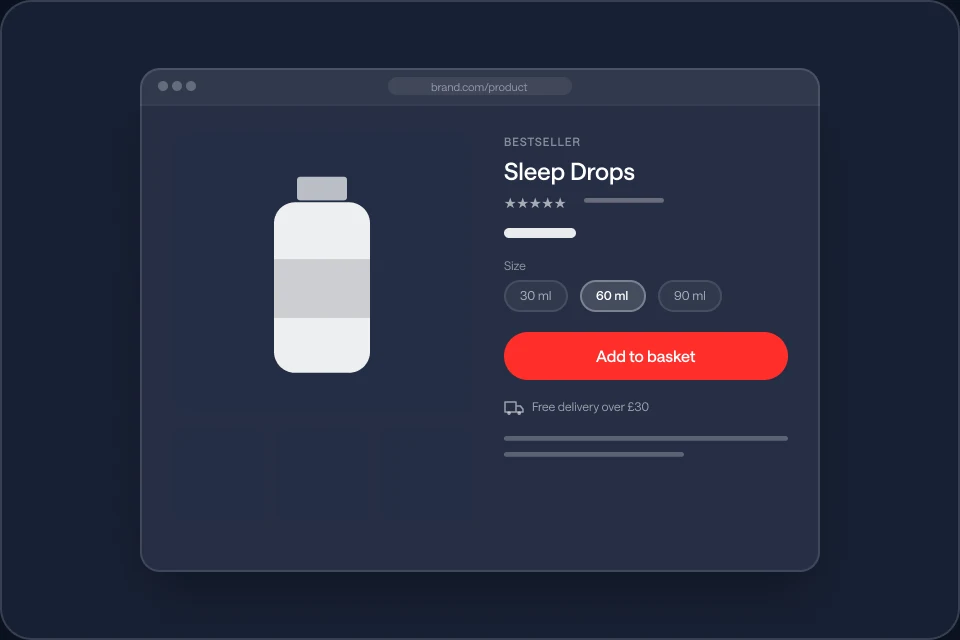
Product pages
Can people find the size, price and reasons to buy?
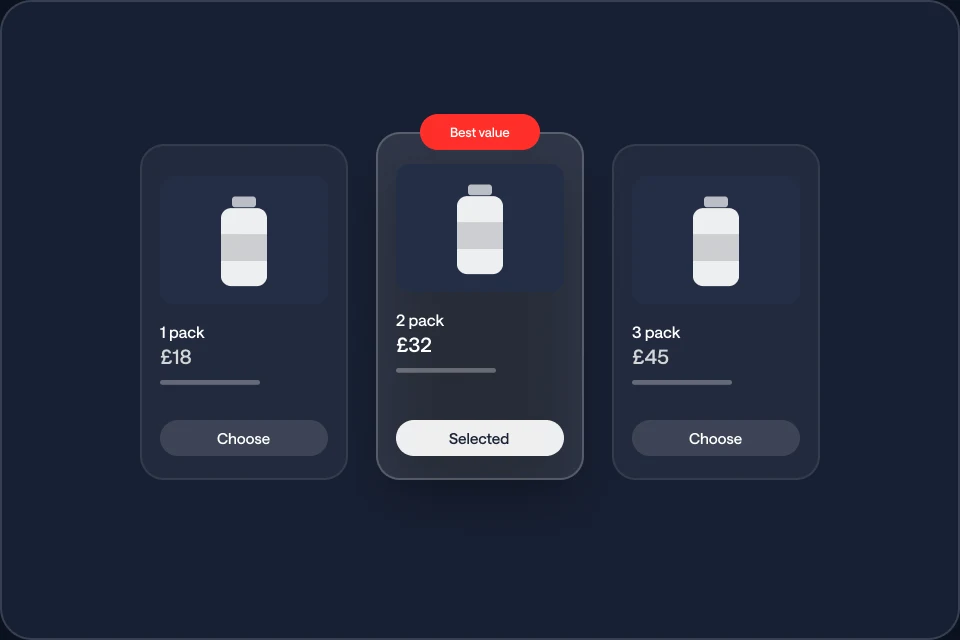
Offers and prices
Are prices, bundles and discounts easy to understand?
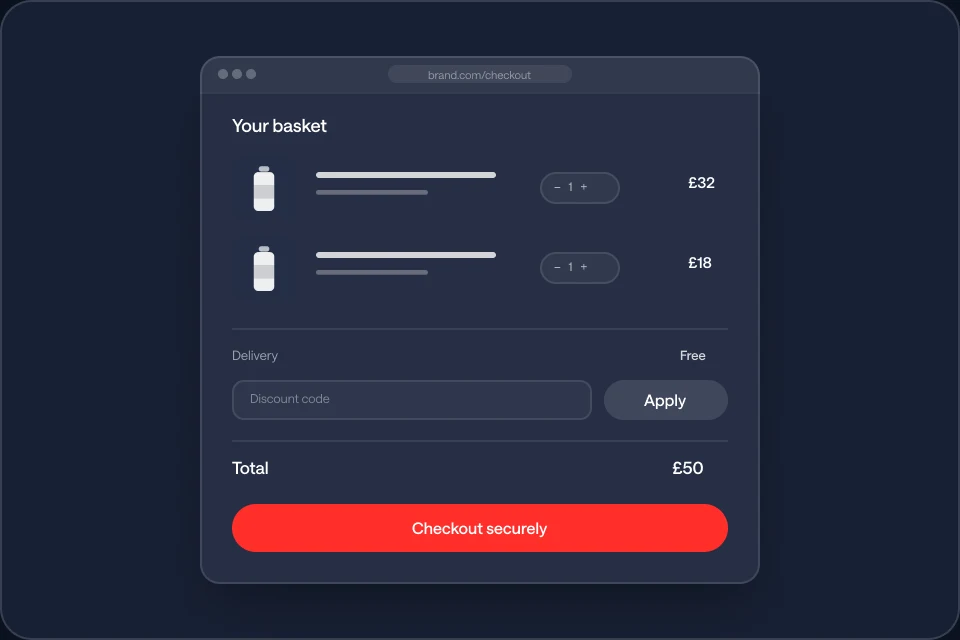
Basket and checkout
Are there surprise costs or extra steps before paying?
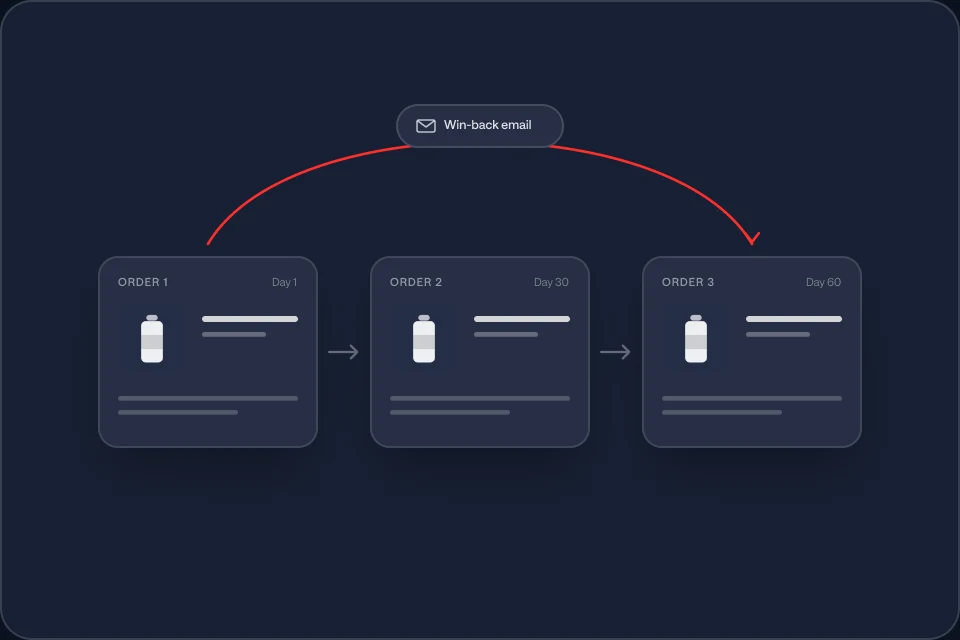
Repeat orders
Is it easy to buy again, or to change a subscription?
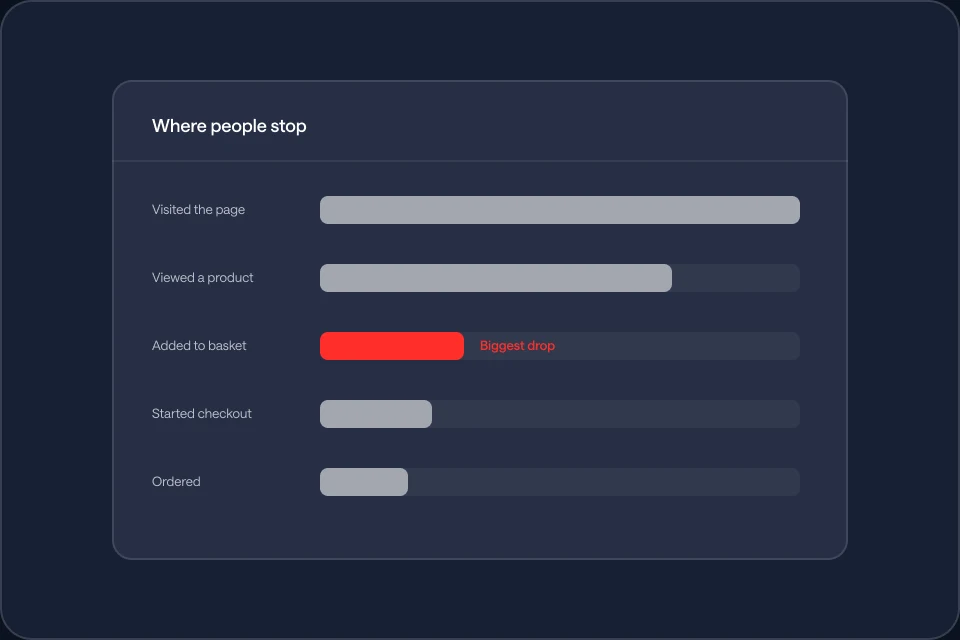
Where people leave
We look at the numbers for each step to see where people stop.
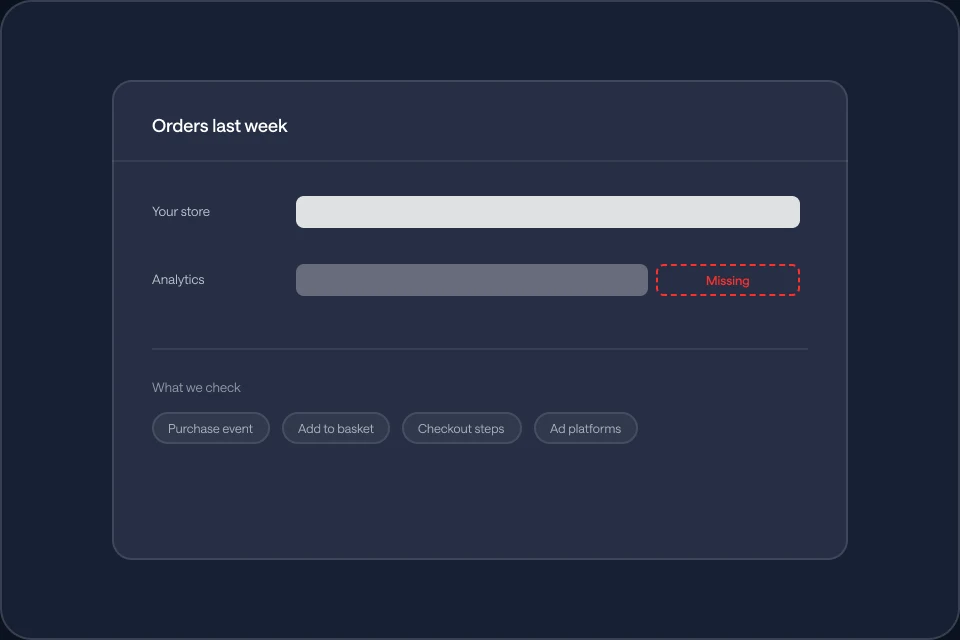
Your tracking
We check your numbers are right before we trust them.
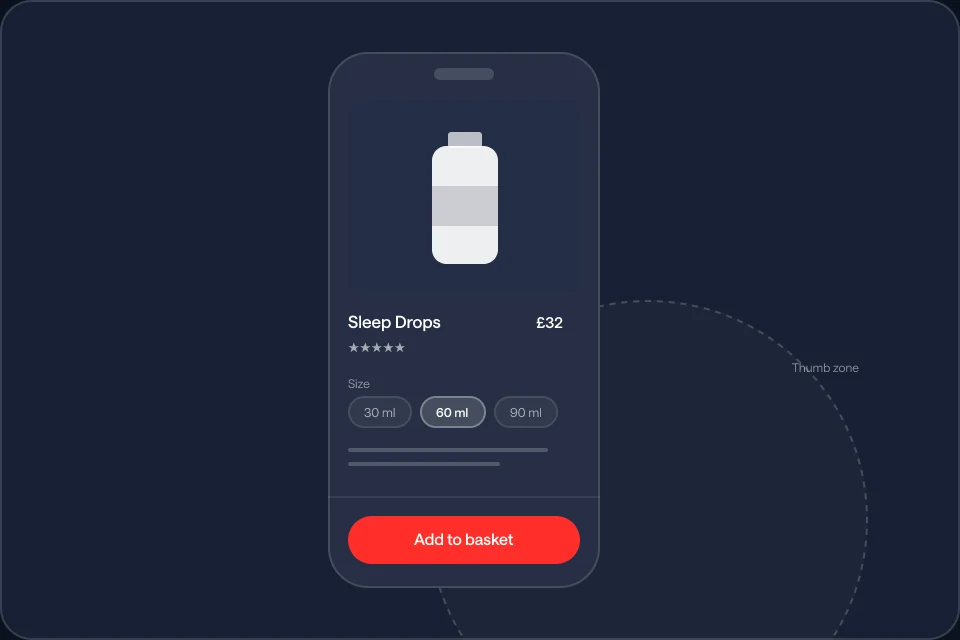
On a phone
Is every step easy with one thumb on a small screen?
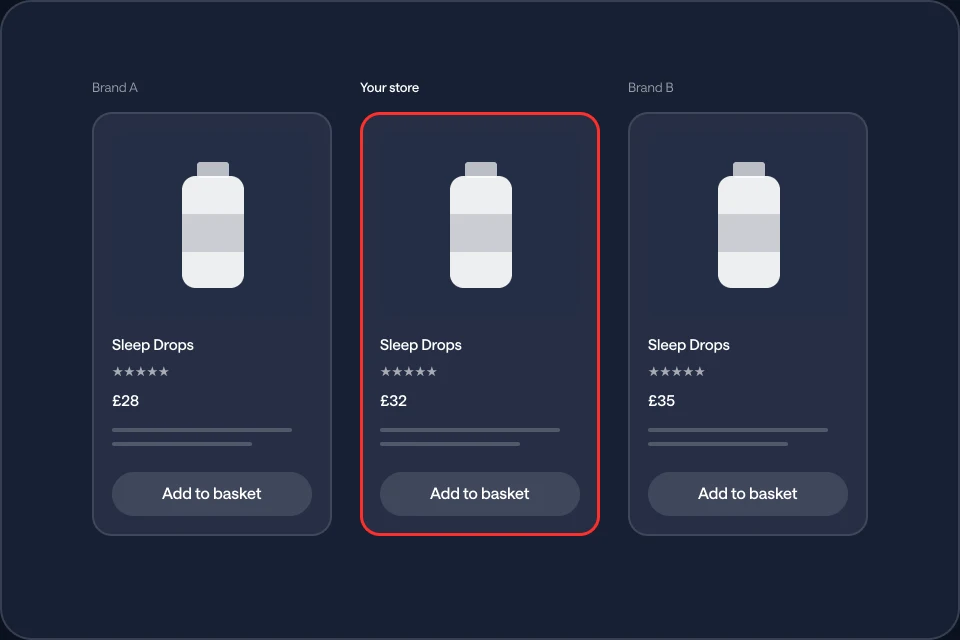
Other stores
How do similar stores in your market handle the same step?
How we check our work
Three ways we make sure the audit is right.
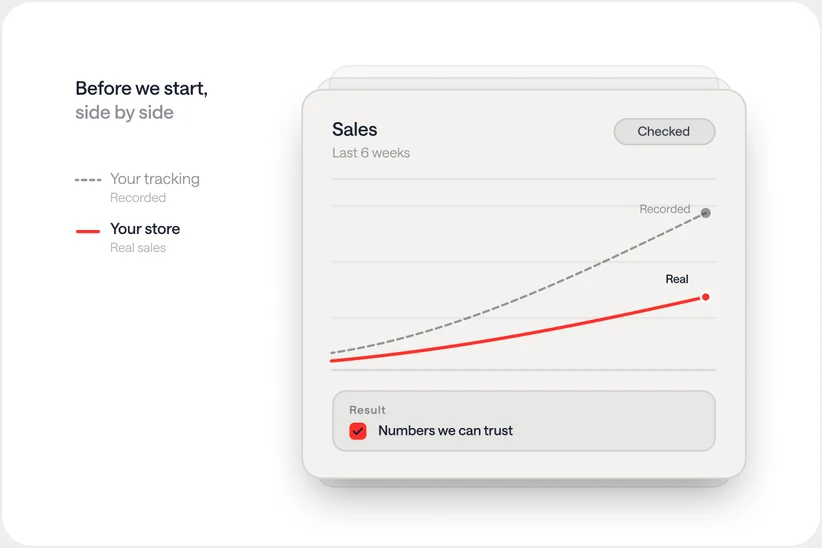
We check your numbers first
We compare your tracking with your store before we judge anything.
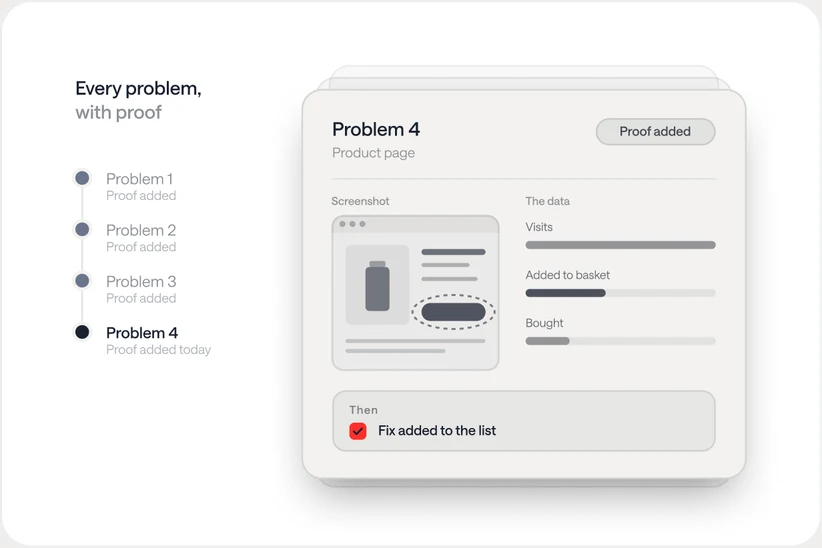
Every problem has proof
Each one comes with a screenshot and the data behind it.
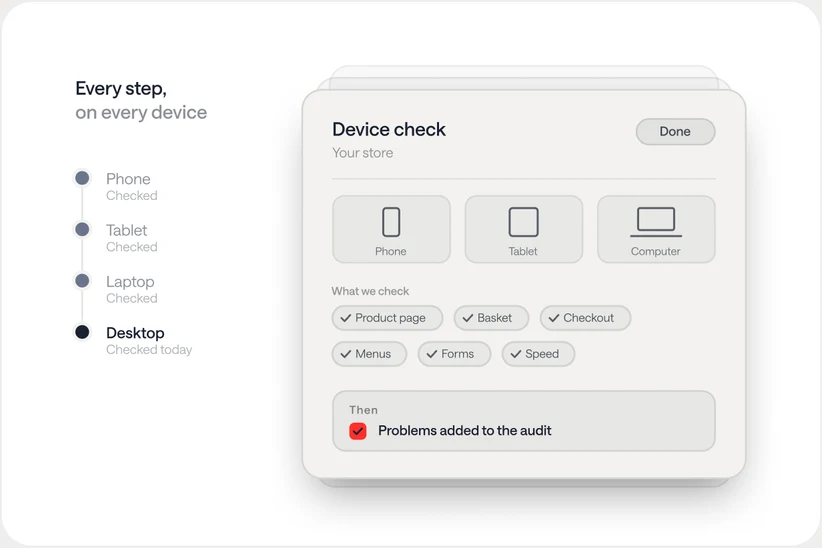
We test on real devices
Every step is checked on a phone and a computer.
What you receive
A written audit, and a live call where we walk you through it.
Each problem we find shows
Where the data allows, we estimate the effect on sales. We always say it is an estimate and show how we worked it out.
 The problem
- A screenshot and the data
- The change we suggest
- The number it should move
- How important it is
- How much work it needs
- How we will measure it
A recording of the call is included where agreed.
A live call
60 to 90 minutes. We walk you through what we found, with time for your questions.
A written audit
Everything we found, with advice on how to make each change.
What to fix first
A list of every fix in order, so you know exactly where to start.
Common questions
Answers to questions about working with us.
Everything after someone clicks your ad: the landing page, the product page, the basket and checkout.
AI tools can be useful for generating initial ideas, but a long list of suggestions doesn’t establish which changes are right for your store. RedPxl evaluates recommendations in the context of your business, customer journey and available evidence. We consider commercial relevance, confidence, implementation effort and potential risk, distinguishing between evidence-backed findings and hypotheses that need validation.
The exact requirements depend on the scope and the questions being investigated. Useful sources may include GA4, ecommerce analytics, advertising landing page information, heatmaps, session recordings, customer surveys, product reviews and support feedback. We agree the required access during scoping and explain any limitations if key data is unavailable.
Not necessarily. Higher traffic volumes can provide more quantitative evidence, but useful insights can also come from usability reviews, customer feedback and qualitative research. The recommendations will reflect the strength of the available evidence. Where traffic is too low to support a reliable statistical conclusion, we won’t present a hypothesis as a proven result.
The timeline depends on the size and complexity of your store, the number of customer journeys included and how quickly the required information is available. We’ll confirm the expected delivery timeline during scoping.
Where sufficient data exists, we can assess the potential commercial impact of an opportunity and document the assumptions behind the estimate. These figures are estimates, not guaranteed results. Where the data doesn’t support a credible estimate, we’ll explain the likely opportunity and recommend how to validate it.
Implementation is not automatically included in the audit. The audit provides the findings and roadmap. If you’d like RedPxl to implement the recommendations, we can scope the relevant work separately. You’re also free to implement the findings with your internal team or another partner.
It can help clarify whether the issues are concentrated in particular pages or reflect wider structural problems. If the findings suggest that a full redesign is warranted, we’ll explain the reasoning. If targeted improvements are more appropriate, the recommendations should reflect that instead.
Talk to us about an audit
- zain@redpxl.uk
- Phone
- +44 7525 832432
- Office
- Canary Wharf, London
- Hours
- Mon to Sun, 09:00 to 18:00
Want us to look at what happens after your ads? Send us a message.